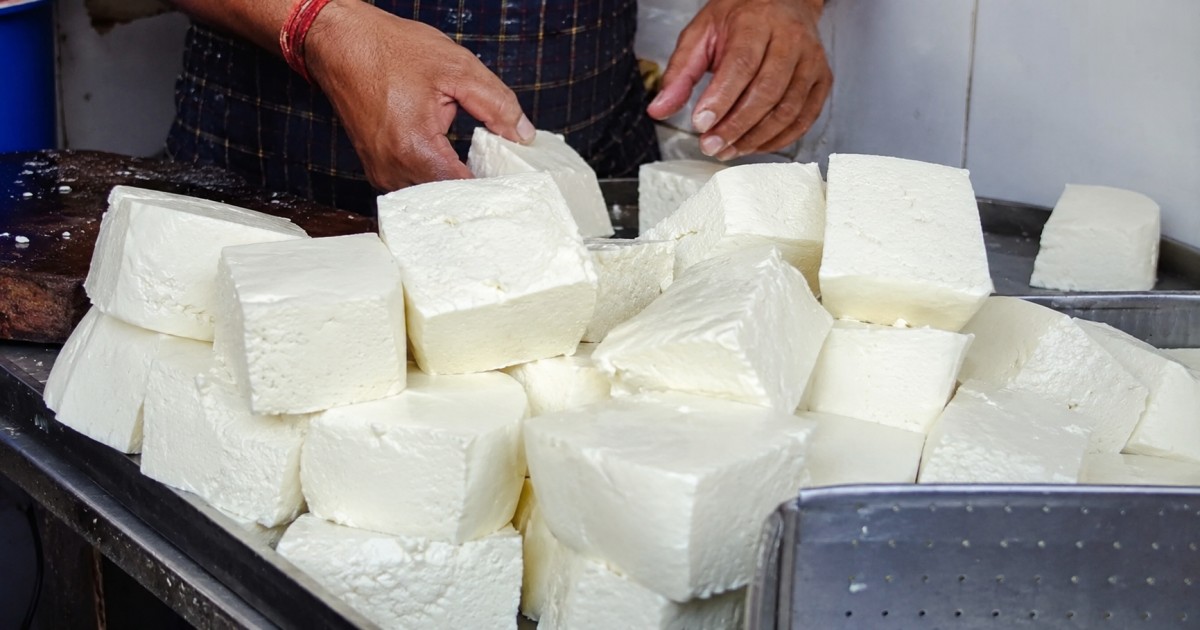
Quick Answer: "Analogue paneer" is a paneer look-alike made with vegetable oil, starch and emulsifiers instead of milk fat. Since August 2026, at least six Indian states, Chhattisgarh, Maharashtra, Gujarat, Madhya Pradesh, Karnataka and Himachal Pradesh, have banned selling it as regular "paneer." There's no national ban yet, though FSSAI's CEO has signalled one could be coming after the National Human Rights Commission stepped in.
In May 2026, Pune's food safety officers raided a unit and walked out with roughly 1,400 kg of paneer-like blocks made from palm oil and milk powder instead of milk. It wasn't an isolated find. According to Business Standard, when the Maharashtra FDA tested 308 paneer and non-dairy analogue samples collected between April 2025 and March 2026, 109 of them, about 35.4%, failed to meet prescribed standards. Thirty were declared outright unsafe.
That data point is what set off a chain reaction. Over the following three weeks, state after state moved to ban the practice. Here's what's actually banned, where, and how to tell if the paneer in your fridge is the real thing.
What Is Analogue Paneer, Exactly?
Real paneer is just curdled milk, milk solids and milk fat, nothing else. Analogue paneer swaps the milk fat for vegetable oils (often palm oil), along with starch, stabilisers and emulsifiers to mimic the texture. It looks like paneer, cuts like paneer, and in a curry you'd likely never notice the difference.
The product itself isn't automatically illegal. Selling it honestly labelled as an "analogue" or "imitation" dairy product is permitted under food safety law. The violation is selling it as plain "paneer" without disclosure, which is exactly what enforcement raids have been finding at wholesalers, restaurants and cloud kitchens.
Which States Have Actually Banned It (And What Each Ban Covers)
This is the part worth reading carefully, because the bans aren't identical. Some cover paneer alone, others extend to cheese and butter, and the stated duration differs by state:
- Chhattisgarh (August 1, 2026): The first state to act. Banned the manufacture, sale and use of analogue paneer, cream and butter, for one year or until final FSSAI guidelines are issued, whichever comes first.
- Maharashtra (August 5, 2026): Banned the manufacture, storage, transport and sale of analogue paneer specifically, for one year, following the FDA's 35.4% sample failure rate.
- Gujarat (August 5, 2026): Banned production, storage, transport, distribution and sale of "unstandardised" analogue paneer, cheese and butter. No fixed duration was stated in the order as reported.
- Madhya Pradesh (August 12, 2026): CM Mohan Yadav directed an immediate ban on manufacture, storage, transport, distribution and sale of analogue paneer and other imitation dairy products. No duration was specified.
- Karnataka (notified August 17, 2026): Banned manufacture, storage, distribution and sale of analogue or non-dairy paneer sold under the name "paneer," for one year.
- Himachal Pradesh (August 20, 2026): Banned manufacture, storage, distribution and sale of non-dairy analogue paneer specifically when sold as genuine dairy paneer, for one year, under Section 30(2)(a) of the Food Safety and Standards Act.
Notice the pattern: every one of these bans targets mislabelling, selling an imitation product under the "paneer" name, not the existence of the product itself. An honestly labelled analogue paneer product remains legal to sell in most of these states.
Is There a National Ban Coming?
Not yet, and it's worth being precise about where things actually stand. According to Free Press Journal, the National Human Rights Commission, in a bench led by Priyank Kanoongo, took cognisance of the issue in mid-August and sought detailed clarifications from FSSAI and every state and Union Territory on analogue paneer's regulatory status, permissible composition, health implications and testing methods. Authorities were given two weeks to submit Action Taken Reports.
Separately, Business Standard reported on August 28, 2026 that FSSAI CEO Rajit Punhani told Navbharat Times a nationwide prohibition "could soon" be announced as more states act. But as of that report, no national ban had been finalised. What exists today is six separate state orders, not one central law.
Why This Escalated So Fast: The Penalties Involved
Selling analogue paneer as real paneer isn't treated as a minor labelling slip. It falls under the Food Safety and Standards Act, 2006, which allows for up to six months' imprisonment and a fine of up to ₹1 lakh for such violations, and life imprisonment with a minimum ₹10 lakh penalty in cases where unsafe food causes death. That's a meaningful part of why states have moved on this so quickly once testing data started surfacing.
How to Check If Your Paneer Is Real
You don't need a lab to get a reasonable read at home. A few simple checks, drawn from FSSAI's own public guidance, can help:
- The iodine test: Boil a small piece of paneer in water, let it cool, and add a drop of iodine solution. If it turns blue, that indicates starch, a common filler in analogue versions.
- The toor dal test: Use the same water the paneer was boiled in, add a few raw toor dal grains, and leave it for about 10 minutes. A shift toward pink or light red suggests an adulterant reaction.
- The heat and texture test: Real paneer holds its shape and firms up further when heated. Analogue versions tend to release oil, turn unusually soft, or lose structure when cooked, since vegetable fat behaves differently from milk fat under heat.
- Check the label: Packaged products are required to disclose "analogue," "imitation," or "non-dairy" on the pack. If a loose or packaged product is priced noticeably below standard paneer rates, that's also worth a second look.
Worth noting: the reason products like analogue paneer draw scrutiny is exactly the same reason clean labelling matters everywhere, including in what you drink. Amaayu Gut Health Water and Amaayu Alkaline Water are built on the same idea in reverse: what's listed on the label is what's actually in the bottle, with zero added sugar, colour or flavour.
This is a functional beverage and is not related to dairy products or paneer in any way. It does not treat, cure or prevent any condition linked to food adulteration.
Frequently Asked Questions
Is analogue paneer illegal to sell in India?
Not by itself. Selling it honestly labelled as an "analogue" or "imitation" dairy product remains legal in most states. What's now banned in six states is selling it under the plain name "paneer" without disclosure.
Which states have banned analogue paneer so far?
As of the most recent reporting, Chhattisgarh, Maharashtra, Gujarat, Madhya Pradesh, Karnataka and Himachal Pradesh have each issued bans, though the exact scope (paneer only, or paneer plus cheese and butter) and stated duration vary by state.
Is there a nationwide ban on analogue paneer?
No, not yet. FSSAI's CEO has said a nationwide prohibition could be announced soon, after the National Human Rights Commission sought clarifications from the authority and all states in mid-August 2026, but nothing has been finalised at the national level.
Can I test paneer for adulteration at home?
Yes, to a reasonable extent. The iodine test (checking for starch) and the toor dal test (checking for a colour-shift reaction) are simple home checks. They aren't lab-grade, but a positive result is a reasonable signal to stop buying from that source.
Why did this become such a big story so quickly?
Maharashtra's FDA testing found over a third of sampled paneer and non-dairy analogue products failed safety standards, with some declared outright unsafe. That data, combined with penalties as serious as imprisonment under the Food Safety and Standards Act, pushed multiple states to act within the same month.
The Bottom Line
This isn't a single national rule yet, it's six states independently drawing the same line: call it paneer only if it's actually made from milk. Whether a national standard follows depends on what FSSAI and the states report back to the NHRC. Until then, the safest approach is the oldest one: know your source, check the label, and when in doubt, run the boiling water test before it goes in the curry.
This article is based on media reports and official state orders as of late August 2026. Regulatory details, including scope and duration of state bans and any future national rule, may change. This article is for general informational purposes only and does not constitute food safety, legal or medical advice.
This article is brought to you by the Amaayu Wellness Team, who believe in everyday balance and wellness. For more wellness content, visit amaayu.com


