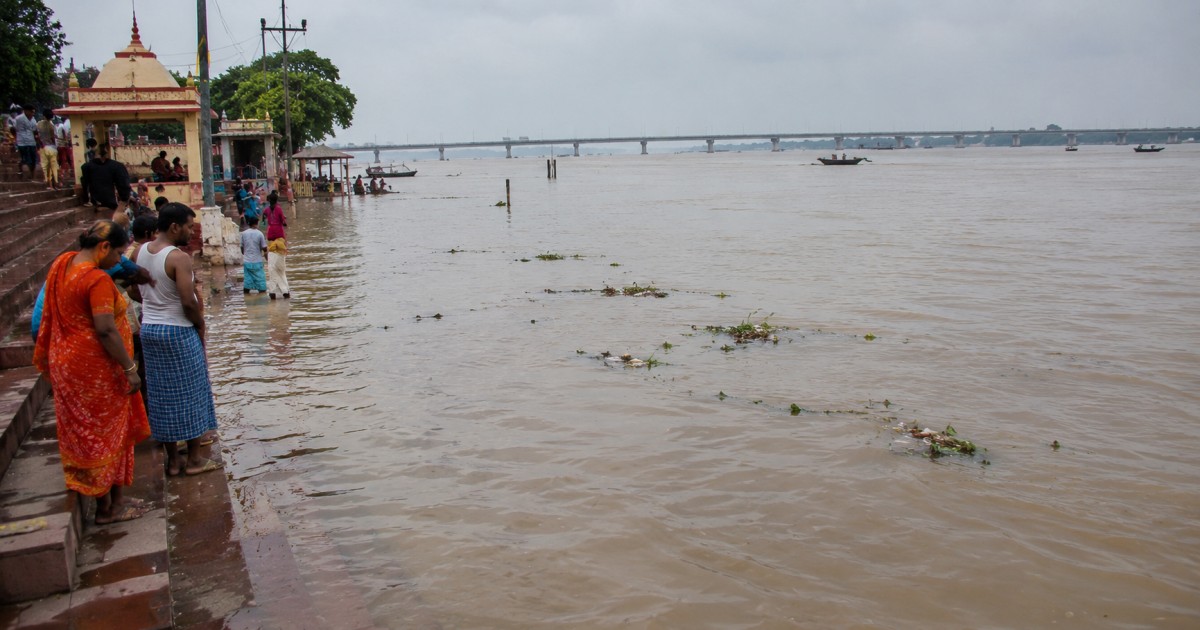
Something broke at Gandhi Ghat on Saturday morning that hadn't broken in ten years. The Ganga touched 50.53 metres, one centimetre past the highest flood level ever recorded at that gauge station, a mark that had stood since 2016. It happened fast too, the river climbed 10 centimetres in just four hours, according to a Water Resources Department bulletin cited by Business Today and PTI.
For a city that has watched this river rise and fall for generations, a new record is not a small thing. It means water is sitting higher against embankments than anyone alive has planning documents for. Around 10.26 lakh people across 11 districts of Bihar are now dealing with the fallout, and the number climbing higher isn't over yet.
What Actually Happened at Gandhi Ghat
The previous highest flood level at Gandhi Ghat was 50.52 metres, set on 21 August 2016. On the morning of 5 September 2026, officials watched the river cross that line and keep going, reaching 50.53 metres by 10am, as reported by The Week. The danger mark itself sits much lower, at 48.60 metres, so the river isn't just above danger level, it's above the worst level this particular gauge has ever measured.
The Water Resources Department's forecast doesn't offer much relief either. Officials expect the level to keep rising to around 50.62 metres by 8am the following morning, according to The Federal. That's not a one-day event playing out and fading, it's a river still climbing while districts try to keep up.
Who Is Affected
The 11 districts named in official bulletins are Patna, Bhojpur, Saran, Vaishali, Bhagalpur, Begusarai, Buxar, Samastipur, Munger, Katihar and Araria. It isn't only the Ganga either. The Gandak is above danger mark at Dumriaghat and Hajipur, the Kosi at Baltara, the Burhi Gandak at Khagaria, and the Ghaghara at Darauli, per Kashmir Reader. Multiple river systems are running high at the same time, which is part of why this flood feels bigger than a routine monsoon swell.
Bihar Chief Minister Samrat Choudhary has directed ministers and senior officials to visit the affected areas directly and stay camped there to supervise relief work, rather than manage things from Patna. The state has deployed 27 State Disaster Response Force teams and 9 National Disaster Response Force teams to the ground, with district magistrates and police told to keep continuous patrols along river-facing embankments.
This flood didn't come out of nowhere. It's tied to the same catastrophic flash floods in Nepal's Rasuwa region that sent water down the Trishuli into the Gandak and Kosi systems, the same water that carried unfamiliar fish species into Bihar's rivers and triggered a separate fisheries advisory earlier this month. One disaster upstream is now showing up as multiple, connected problems downstream.
The Part That Gets Less Attention: What's Happening to the Water Supply
Headlines focus on the river because it's visible and measurable in centimetres. What gets less coverage is what a flood like this does to the water people actually drink and cook with. When rivers rise this high, they don't stay contained. They push into low-lying areas, mix with drains, submerge hand pumps, and sit in places drinking water usually doesn't reach.
Shallow groundwater sources are the most vulnerable. A hand pump that's normally fine can pull in sewage runoff once floodwater surrounds it. Pipelines running close to flooded drains can cross-contaminate through cracks and joints that never mattered until the water table rose. Even water stored in containers at home isn't automatically safe if the storage area itself gets flooded. This is exactly the mechanism that made floodwater fish a health concern in Bihar's recent fish advisory, and it applies just as much to the water coming out of the tap.
What To Watch For
If your family has been drinking or cooking with water from a source that may have been touched by floodwater, keep an eye out for vomiting, sudden diarrhoea, stomach cramps, dizziness, or fever. These symptoms show up because contaminated water carries bacteria like E. coli and Salmonella that thrive in flood conditions. Vomiting and diarrhoea together drain the body fast, and that combination is what turns a stomach upset into a hospital visit within a day, particularly for children and elderly family members.
What Actually Helps
Plain water doesn't replace what your body loses once diarrhoea or vomiting has started. ORS is the right first response, not plain water and not sports drinks, because it's built with the specific sodium-to-glucose ratio your gut needs to absorb fluid quickly when it's inflamed. If anyone in your family shows these symptoms, ORS first, doctor immediately after.
Prevention looks different from treatment. Boiling water before drinking it, avoiding water from sources near flooded areas, and choosing sealed, tested drinking water over open containers are the basics that actually reduce risk during a week like this.
Where Something Like Amaayu Fits
We want to be direct about this: Amaayu does not treat waterborne illness, and if your family is already showing the symptoms above, the right move is ORS and a doctor, not a bottle of functional water. What Amaayu is useful for is the ordinary days around a flood like this, when the water supply in your area is under visible strain and having a source you don't have to second-guess matters more than usual. Our Alkaline Water is multi-stage purified and pH-balanced, built for everyday hydration when your usual water source feels uncertain. The Gut Health Water leans on prebiotics for digestive resilience, which matters during a season when gut infections spike across flood-hit states every single year.
Neither product is a substitute for medical care, and neither claims to reverse an infection that's already started. What they offer is one less thing to worry about on the days before and after, when clean water access is exactly the kind of basic that a flood makes complicated.
Questions People Are Asking
Is the water safe to drink in Patna right now?
Tap and groundwater sources near flooded or low-lying areas should be treated with caution. Boiling water before use and avoiding sources close to breached embankments is the safest approach until levels recede and authorities confirm supply safety.
How high did the Ganga actually get compared to the old record?
The river reached 50.53 metres at Gandhi Ghat on 5 September 2026, one centimetre above the previous highest flood level of 50.52 metres set in August 2016.
Which areas are most at risk right now?
Low-lying areas across Patna, Bhojpur, Saran, Vaishali, Bhagalpur, Begusarai, Buxar, Samastipur, Munger, Katihar and Araria districts, particularly anywhere close to river embankments.
Is this related to the Nepal floods from earlier this month?
Yes. This rise is connected to the same flash floods in Nepal's Rasuwa region that sent water down the Trishuli into the Gandak and Kosi river systems affecting Bihar.
What should displaced families prioritise first?
Safe drinking water and basic sanitation come before almost everything else in the first 48 hours. Waterborne illness spreads fastest in exactly this window, and it's often more dangerous than the flood itself for young children and elderly family members.
A river doesn't just rise and fall in isolation. It carries everything upstream with it, and right now that includes ten years of assumptions about how high Patna's water can actually go. The record will likely be studied for years, but the more immediate job, for families and for the state, is getting through this week safely. That starts with something as basic as knowing where your next glass of water is actually coming from.
This is informational content, not medical advice. If you or your family show signs of waterborne illness, see a doctor immediately.


